A small entryway can become messy surprisingly fast.
One pair of shoes by the door turns into four. Then someone drops a bag on the floor. Kids come home and kick off their sneakers. Work shoes, sandals, slippers, and boots start collecting around the entrance.
Before long, the first thing you see when you walk into your home is clutter.
But the problem isn’t necessarily that you own too many shoes.
Sometimes, the real problem is that the entryway doesn’t have a designated place for them.
That’s why a well-designed shoe cabinet can make such a noticeable difference—especially in apartments, narrow hallways, townhomes, and smaller houses where every inch of floor space matters.
Instead of treating shoe storage as something you have to hide, you can make it part of the room’s design.
As an Amazon Associate, I earn from qualifying purchases.
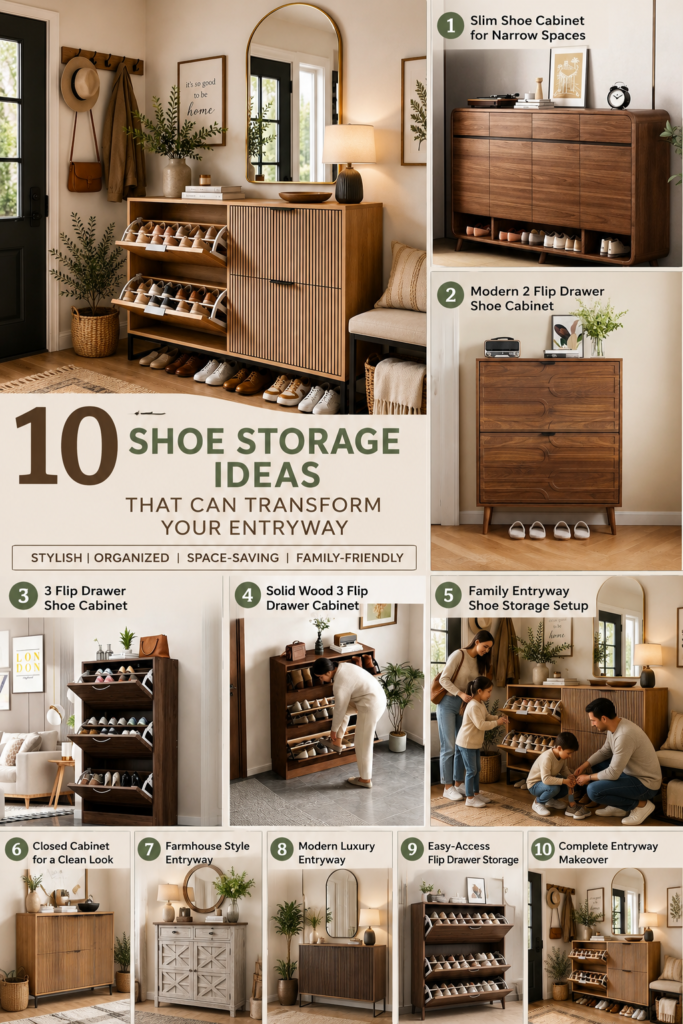
Here are 10 practical and beautiful shoe-storage ideas that can help turn an overlooked entrance into one of the most organized areas of your home.
1. Use a Slim Shoe Cabinet in a Narrow Entryway
One of the biggest challenges in a small entrance is depth.
A traditional bookcase or storage cabinet may hold plenty, but if it sticks too far into the hallway, suddenly everyone has to walk around it.
That’s where a slim shoe cabinet becomes especially useful.
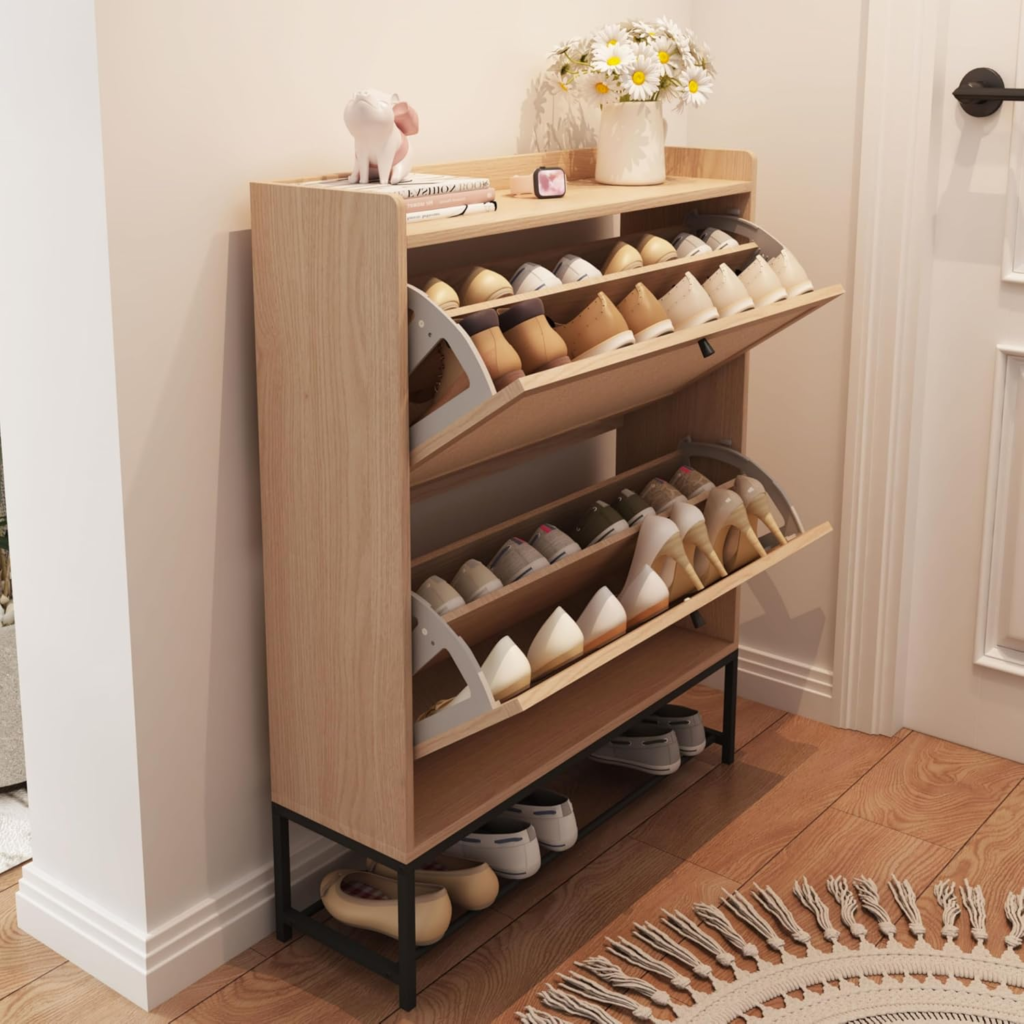
Flip-drawer designs allow shoes to sit at an angle inside the cabinet. Because of that, the furniture can have a relatively shallow profile while still providing multiple rows of storage.
This makes the idea particularly useful beside a front door or along a narrow hallway wall.
How to style the corner
Place the cabinet against the longest uninterrupted wall near your entrance.
Above it, add a round or arched mirror. A mirror visually opens a small area and also gives you somewhere to check your appearance before leaving.
Then keep the top simple:
- One small lamp
- A ceramic vase with greenery
- A catchall bowl for keys
- One or two decorative books
You don’t need to cover every inch.
Leaving some empty space can actually make the entryway look larger and more expensive.
Why people may love this setup: it solves a storage problem without making a small entrance feel like a storage room.
2. Create a Beautiful Closed-Cabinet Entryway
Sometimes the most attractive shoe storage is the storage you can’t see.
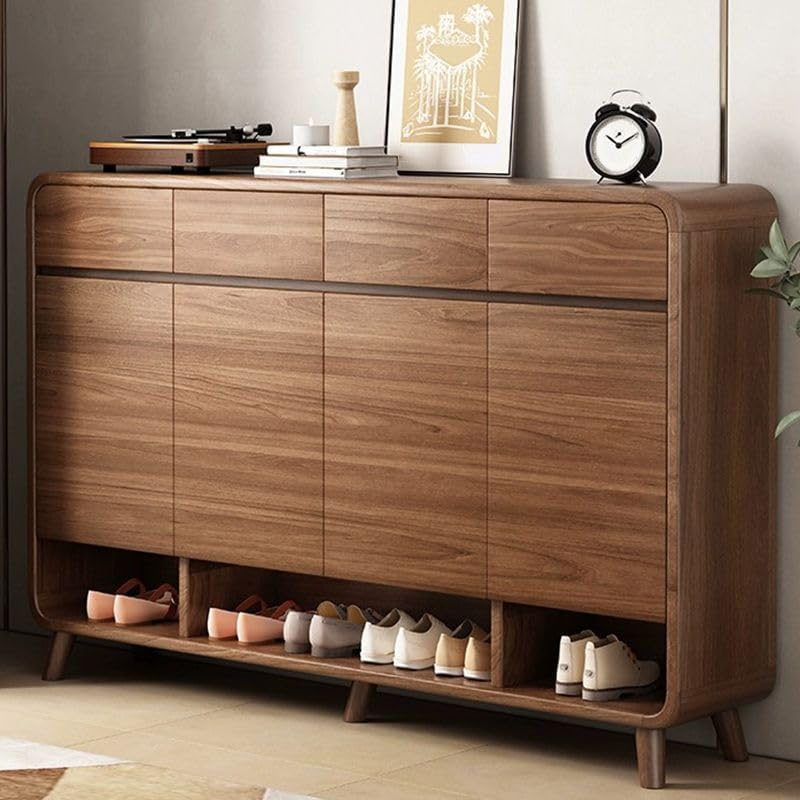
If you dislike looking at rows of sneakers and sandals, choose a cabinet that looks more like regular furniture when closed.
This approach works particularly well in open-concept homes where the front entrance is visible from the living room.
Instead of immediately seeing shoes when you walk through the door, you see a beautiful piece of furniture.
Make it feel intentional
Treat the top like a console table.
Try an arrangement with:
One tall item:
A lamp or large vase.
One medium item:
A stack of books or decorative box.
One small item:
A candle, bowl, or diffuser.
Then hang a mirror above everything.
This simple combination gives you the functionality of shoe storage while creating the appearance of a styled entryway console.
It’s one of the easiest ways to make practical furniture feel decorative.
3. Use Flip-Drawer Storage to Save Floor Space
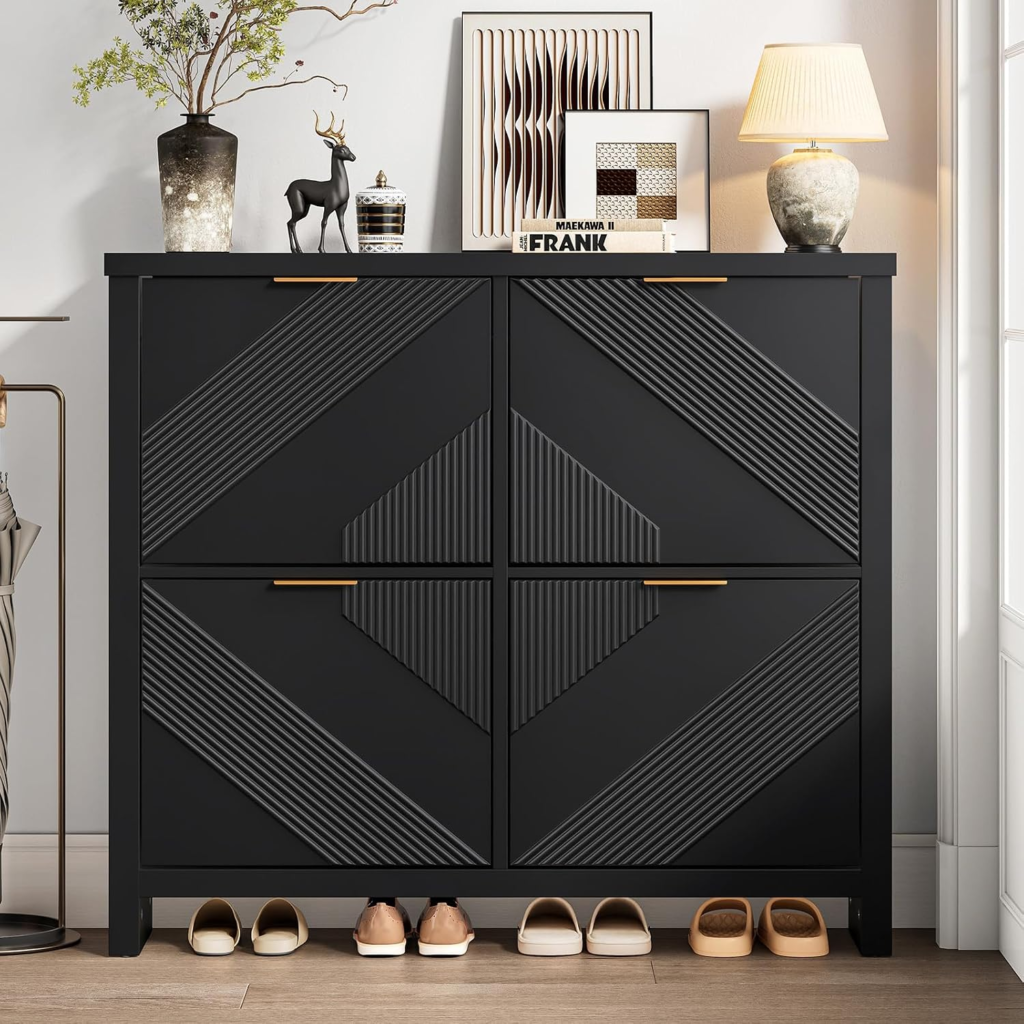
Flip drawers are one of my favorite ideas for small-space shoe organization because the cabinet doesn’t need to be extremely deep.
Pull the front outward and the shoes tilt toward you.
Close it, and everything disappears.
That simple mechanism can make everyday routines easier because you’re not digging through bins or moving pairs around to find what you need.
Where this works best
Try this style in:
- Narrow hallways
- Apartment entrances
- Small foyers
- Bedrooms
- Mudrooms
- Upstairs landings
If possible, leave enough walking room in front of the cabinet for the drawers to open comfortably.
That detail is important.
A cabinet can technically fit a wall while still being inconvenient if there’s no space to open it.
Always think about how the furniture works when it’s being used, not only how it looks when it’s closed.
4. Turn a Tiny Apartment Entrance Into a Real Entryway
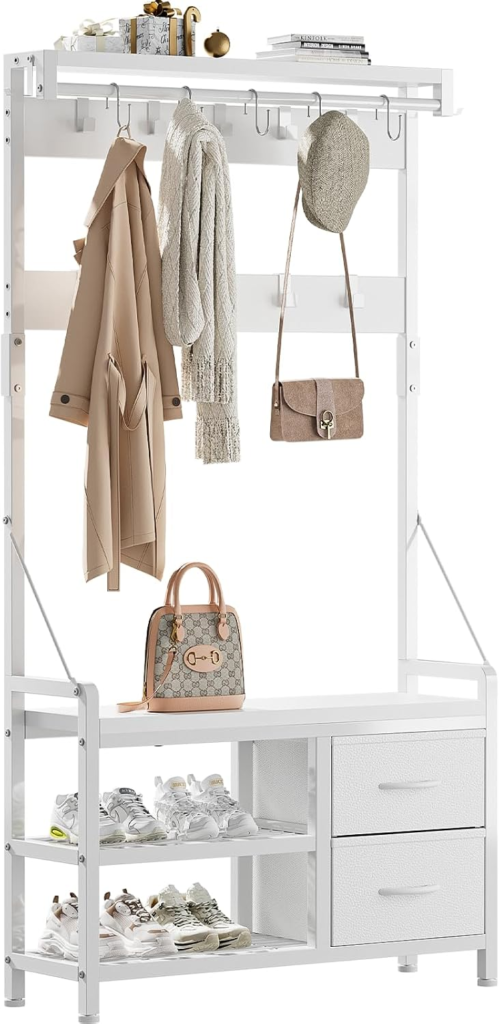
Some apartments don’t actually have an entryway.
You open the door and you’re practically standing in the living room.
In that situation, furniture can create the feeling of a separate entrance.
Place a narrow shoe cabinet directly beside the door and suddenly you’ve established a small “drop zone.”
Build the area vertically
When floor space is limited, use the wall.
Above the cabinet, add:
- A mirror
- Hooks
- A small piece of artwork
Beside it, add a narrow plant if room allows.
The result is a compact vertical storage zone rather than several pieces of furniture scattered across the room.
You can also place a small tray on top for keys and sunglasses.
Now everything you normally search for while leaving the house has a home.
That’s the kind of organization that actually makes a small home easier to live in.
5. Create a Before-and-After Entryway Transformation
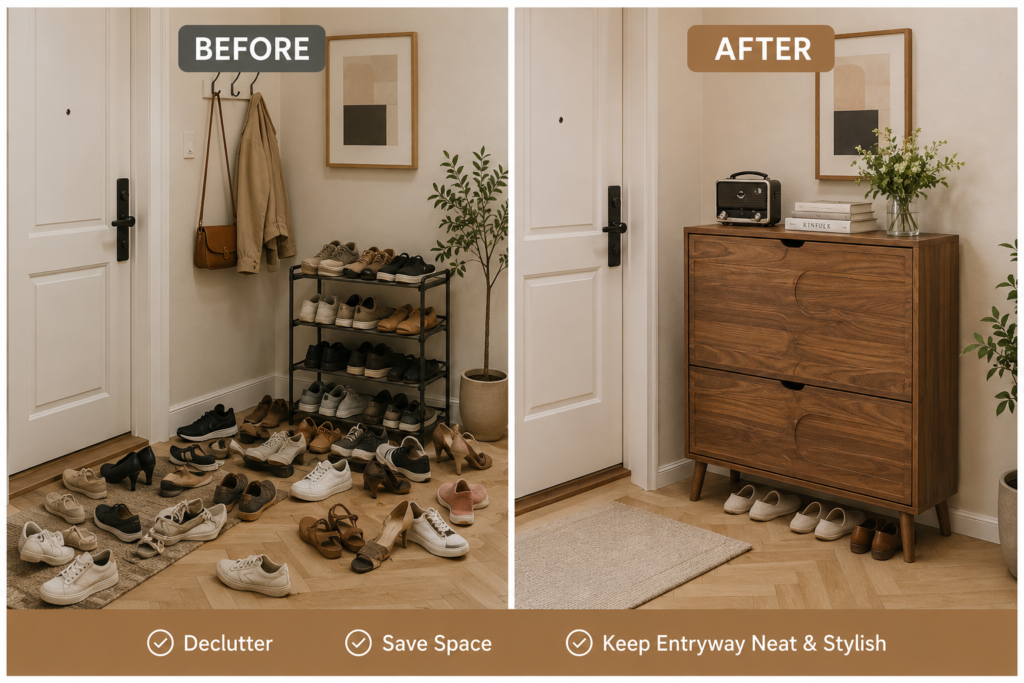
If you want to understand how much impact shoe storage can have, look at the floor first.
Imagine ten pairs of shoes scattered around a small entrance.
Even if everything else is beautifully decorated, those shoes immediately make the room appear busier.
Now imagine those same ten pairs hidden inside one cabinet.
The room itself hasn’t become larger.
But visually, it feels larger.
That’s one of the secrets of small-space decorating:
Reducing visual clutter can be almost as important as adding physical storage.
Don’t stop with the shoes
Once the floor is clear, look at everything else accumulating near the door.
Give each category a home:
Keys → tray
Coats → hooks
Shoes → cabinet
Bags → hook or basket
Umbrellas → narrow holder
Mail → small organizer
When everything has a destination, maintaining the room becomes much easier.
6. Build a Family Shoe-Storage Station
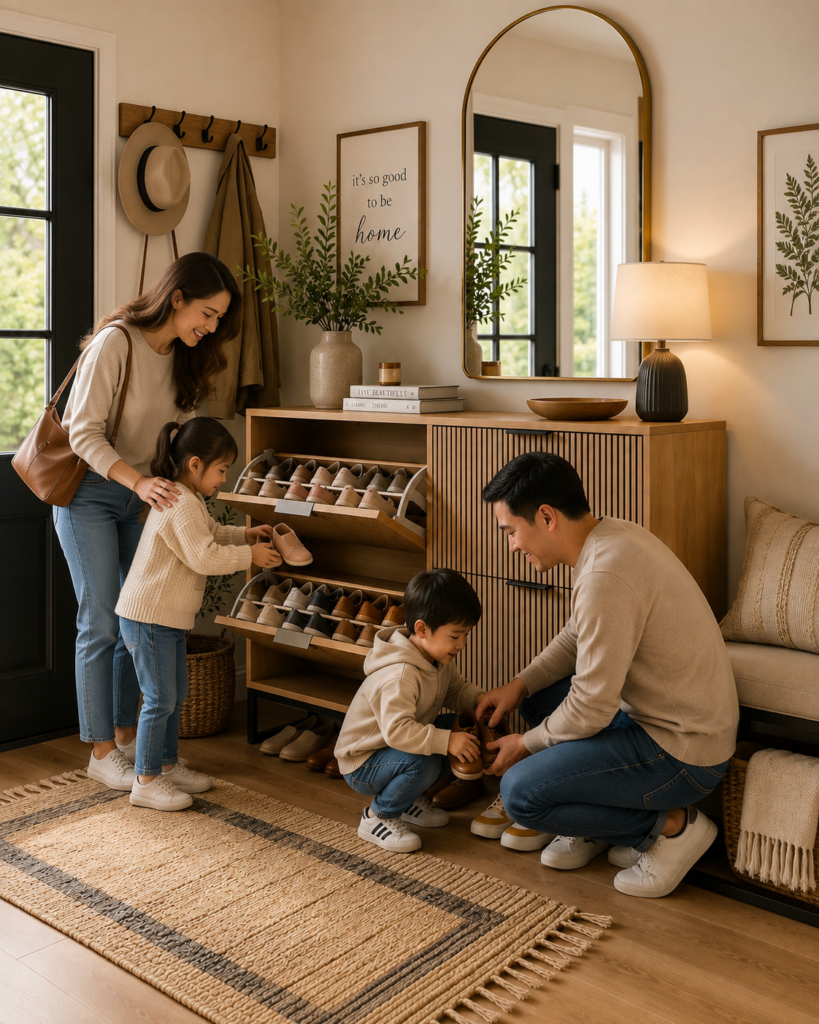
Family entryways require a different approach.
You aren’t organizing five pairs of shoes.
You might be organizing twenty, thirty, or more.
Instead of mixing everything together, divide the cabinet into zones.
For example:
Mom’s shoes
Keep everyday flats, sneakers, sandals, and work shoes together.
Dad’s shoes
Give dress shoes, sneakers, loafers, and work shoes their own area.
Kids’ shoes
Keep children’s shoes on lower shelves whenever possible.
That last part matters.
If kids can reach their own storage area, they’re more likely to actually use it.
A beautiful organization system isn’t very useful if only adults can maintain it.
Create a simple family routine
When everyone comes home:
Shoes go into the cabinet.
Coats go on hooks.
Backpacks or handbags go in their designated spot.
Keys go in the tray.
A few seconds of organization can prevent the entrance from becoming a dumping ground.
7. Create a Warm Farmhouse Shoe-Storage Entryway
Storage furniture doesn’t have to look cold or utilitarian.
A shoe cabinet can blend beautifully into farmhouse décor.
Start with warm wood tones.
Pair them with:
- Cream or white walls
- Woven baskets
- Natural greenery
- A jute rug
- Vintage-inspired lighting
- Wooden hooks
- Neutral textiles
The goal isn’t to fill every surface with decorations.
Instead, use texture.
Wood, linen, woven fibers, ceramic pottery, greenery, and soft lighting create warmth without requiring lots of objects.
Add character above the cabinet
Try a rustic mirror or framed botanical artwork.
A small table lamp can also completely change the atmosphere.
During the evening, instead of relying on bright overhead lighting, turn on the entryway lamp.
The entrance immediately feels warmer and more welcoming.
8. Give Shoe Storage a Modern Luxury Look
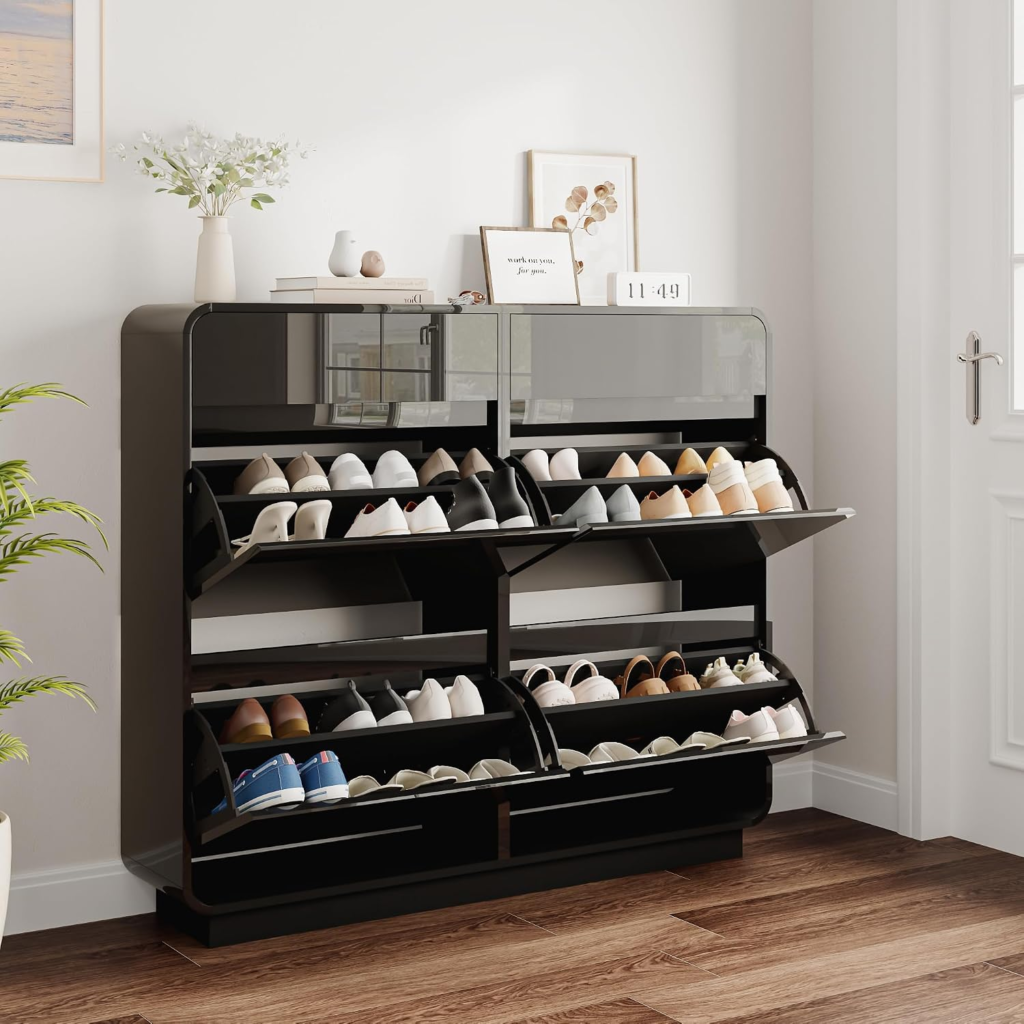
The same storage cabinet can feel completely different depending on what surrounds it.
For a more luxurious entryway, simplify the palette.
Think:
Warm walnut.
Cream walls.
Black accents.
Brass details.
Soft lighting.
Then add one statement piece.
An oversized arched mirror works beautifully because it provides height without adding visual clutter.
The key is restraint
Luxury doesn’t mean filling the room with expensive-looking accessories.
Quite often, the opposite works better.
Choose fewer, larger pieces.
For example:
A large arched mirror.
One sculptural vase.
A beautiful lamp.
A small stack of books.
A decorative bowl.
Then stop.
Let the furniture breathe.
This can make even a relatively inexpensive storage piece look more intentional and sophisticated.
9. Choose Storage That Makes Shoes Easy to See
Hidden storage is beautiful, but accessibility matters too.
If you wear the same shoes frequently, you don’t want to search through several boxes every morning.
That’s why drawers that open wide and display multiple pairs at once can be convenient.
You can immediately see your options.
Sneakers.
Flats.
Loafers.
Sandals.
Work shoes.
Children’s shoes.
Everything has a visible place.
Organize by frequency
Put your most frequently worn shoes in the easiest-to-reach compartment.
Occasional shoes can go higher or deeper inside the cabinet.
Seasonal footwear can move elsewhere entirely.
There’s no reason winter boots need prime entryway space during summer.
Rotating footwear seasonally can dramatically increase the usefulness of a smaller cabinet.
10. Create a Complete Entryway Makeover
Finally, don’t think about the shoe cabinet by itself.
Think about the entire entrance as one small room.
Even a tiny entryway can usually accommodate several functions if they’re planned carefully.
Start with the shoe cabinet
This becomes the main storage piece.
Add a mirror
Place it above or beside the cabinet.
Besides being practical, mirrors reflect light and can make narrow spaces feel more open.
Add wall hooks
Use them for jackets, hats, handbags, or reusable shopping bags.
Hooks use vertical space that would otherwise go unused.
Add a bench
If there’s enough room, a narrow bench gives adults and children somewhere to sit while putting on shoes.
Choose one with storage underneath for even more functionality.
Add a basket
Baskets are excellent for items that don’t need perfect organization.
Think scarves, children’s outdoor accessories, slippers, or dog-walking supplies.
Finish with greenery
One plant can soften all the hard furniture edges and make the entrance feel more welcoming.
Suddenly, what used to be an awkward corner becomes a complete entryway.
What to Look for Before Choosing a Shoe Cabinet
Before buying any shoe organizer, measure carefully.
Don’t only measure the width.
Measure:
Width — Will it fit the available wall?
Depth — Will people still have enough room to walk past?
Height — Will it interfere with switches, windows, artwork, or mirrors?
Drawer clearance — Is there enough room for drawers or doors to fully open?
Then consider the shoes your household actually owns.
Someone who mostly wears sneakers has different storage needs from someone with high heels, boots, or larger men’s shoes.
Adjustable dividers or shelves can be particularly helpful.
Also consider stability.
Tall, narrow furniture should be installed and secured according to the manufacturer’s instructions, particularly in homes with children.
How to Make a Small Entryway Look Bigger
Storage is only half of the transformation.
Once the shoes are organized, use a few decorating tricks to visually enlarge the area.
Keep the color palette relatively consistent.
Use a large mirror to reflect light.
Avoid placing too many small decorations on the cabinet.
Choose furniture with visible legs when appropriate because seeing more flooring can make a room feel lighter.
And most importantly:
Keep the floor as clear as possible.
A clear floor creates visual breathing room.
That’s why hidden shoe storage can have such an outsized impact in a small home.
Final Thoughts
The best shoe-storage solution isn’t necessarily the cabinet that holds the largest number of shoes.
It’s the one that fits naturally into your home and makes everyday life easier.
For one person, that might mean a slim two-drawer cabinet beside an apartment door.
For another family, it could mean a large cabinet divided into sections for parents and children.
And for someone who loves decorating, the cabinet might become the foundation for an entire entryway makeover with an arched mirror, lamp, greenery, hooks, baskets, and a comfortable bench.
The goal is simple:
Give everything a place without making your home feel like a storage closet.
When shoes disappear from the floor, coats move onto hooks, bags have somewhere to go, and the entrance is finished with a few beautiful details, even a very small entryway can feel calm, spacious, and welcoming.
And because the entryway is the first part of your home you see when you return, that’s one corner worth getting right.