A glass shower door can give a bathroom a brighter, more finished appearance. But the right choice starts with your layout—not simply the most attractive photograph.
A narrow pivot door, curved corner enclosure, wide shower slider, and bathtub door solve different problems. Choosing the correct type helps you preserve access, avoid incompatible purchases, and create a bathroom that works comfortably every day.
This guide compares the five products in your screenshots: Bathlink, SHOLVEMIAR, Findepot, HTLOTUS, and ELEGANT.
As an Amazon Associate, I earn from qualifying purchases.
This is a comparison of the supplied listings, not a hands-on review. Confirm specifications against the exact product variant and installation manual. The generated collage provides decorating inspiration rather than installation guidance.
Compare the Five Shower Doors
| Product | Listed dimensions | Glass and finish | Layout to investigate |
|---|---|---|---|
| Bathlink pivot door | 34–36″ W × 72″ H | ¼″ tempered glass; brushed nickel | Narrow shower alcove |
| SHOLVEMIAR curved enclosure | 36″ D × 36″ W × 72″ H | ¼″ tempered glass; chrome | Compatible curved corner base |
| Findepot double slider | 56–60″ W × 75″ H | 8 mm tempered glass; brushed nickel | Wider shower opening |
| HTLOTUS bathtub slider | 56–60″ W × 58″ H | 8 mm tempered glass; chrome | Compatible bathtub |
| ELEGANT semi-frameless slider | 58.5–60″ W × 72″ H | 6 mm tempered glass; brushed nickel | Shower within its stated adjustment range |
The listed width is not the clear entry width. Panel overlap, hardware, and door movement affect the space available for entering and exiting.
1. Bathlink Pivot Door: Consider It for a Narrow Alcove
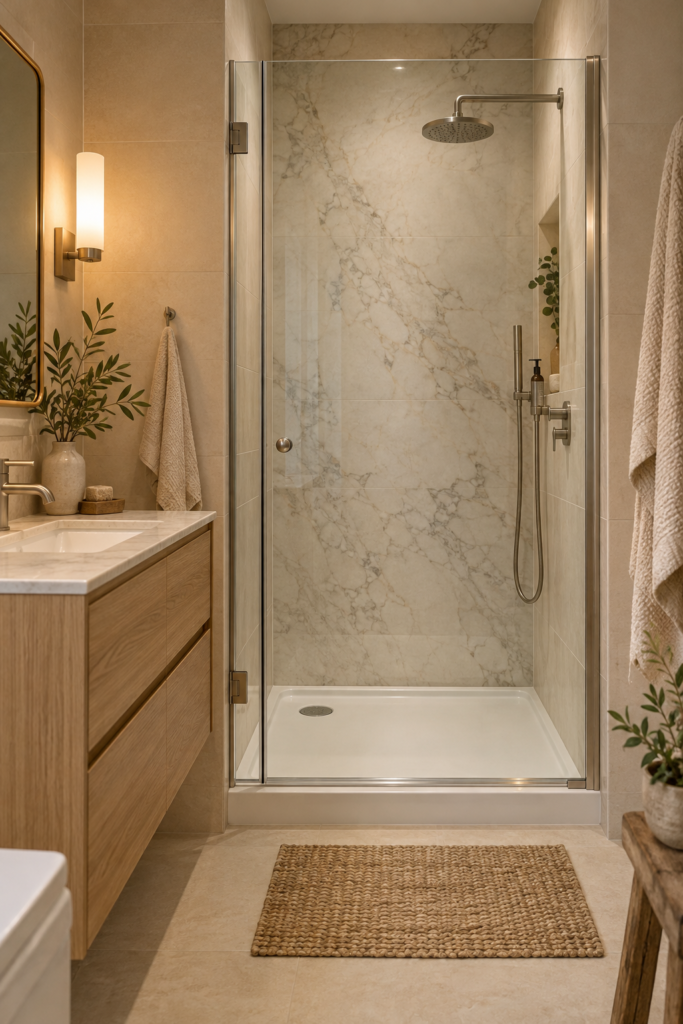
The Bathlink listing describes a semi-frameless pivot door with brushed nickel hardware, tempered glass, and reversible left- or right-opening installation.
Its potential advantage is fitting a narrow shower recess where a wide sliding system would be unsuitable.
The main tradeoff is clearance. Check the door’s complete movement against the toilet, vanity, towel rail, and bathroom entrance. A door that fits between the walls may still be inconvenient to open.
Also, reversible installation does not automatically mean the door swings both inward and outward. Confirm its permitted operation in the manual.
The listing mentions nano-coated glass. Follow its care instructions; a coating does not eliminate cleaning.
How to decorate around it: Pair pale stone-look tile with a compact oak vanity and brushed nickel fittings. Keep accessories restrained to let the narrow shower feel visually open.
Buying verdict: Worth investigating when you have a narrow opening and an unobstructed pivot path.
2. SHOLVEMIAR Curved Corner Enclosure: Check the Base Before Buying
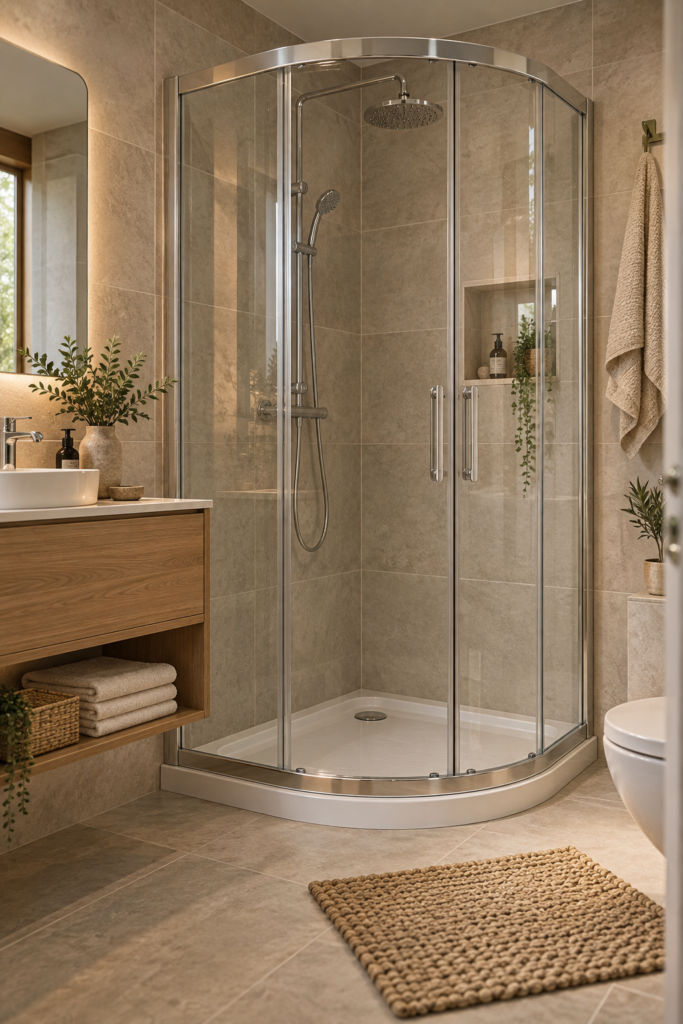
This enclosure combines curved glass, chrome framing, and double sliding doors. The listing explicitly states that the shower base is not included.
Sliding panels avoid a hinged door projecting into the room, which can be useful near other bathroom fixtures. However, check the actual entry opening and usable standing area before deciding that the layout suits you.
The base deserves particular attention. Two components labeled “36 × 36 inches” are not necessarily compatible. The curve, threshold, mounting position, and installation dimensions must match.
The listing also uses both “round corner” and “neo-angle” wording. Because those terms can describe different shapes, use the technical drawing to confirm what you are ordering.
How to decorate around it: Warm gray tile, a floating vanity, and a small amount of greenery can soften the chrome frame.
Buying verdict: Consider it when the corner layout works and compatibility with the exact base has been verified.
3. Findepot Frameless Double Slider: A More Open Appearance
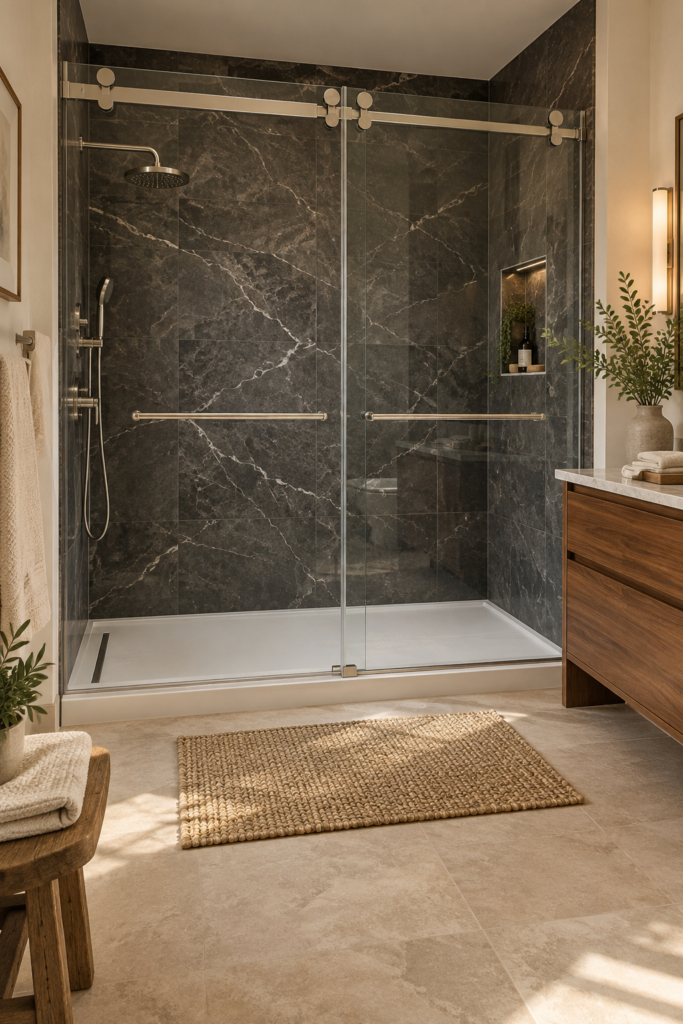
The Findepot listing shows a wider double sliding door with exposed top rollers, brushed nickel hardware, and 8 mm tempered glass.
Its defining visual feature is the roller system. It creates an architectural detail while keeping the glass relatively open in appearance.
Sliding operation avoids a door swing into the bathroom. That makes this type worth comparing when a nearby vanity would interfere with a hinged panel.
Before buying, check the entry width after panel overlap, header clearance, wall-support requirements, and handle projections. Consider access for cleaning between overlapping panels, too.
The listing mentions anti-collision features. Confirm what those features include; the phrase alone does not establish soft-close operation.
How to decorate around it: Dark marble-look tile creates contrast, while pale tile produces a lighter scheme. Repeat brushed nickel in nearby fixtures for a coordinated finish.
Buying verdict: A candidate for a wider shower when you prefer exposed rollers and a less framed appearance.
4. HTLOTUS Bathtub Slider: A Different System for an Existing Tub
The HTLOTUS product is a bathtub bypass door, with a listed height of 58 inches. It should be compared with other tub-specific systems, rather than treated as interchangeable with taller shower-base doors.
Its suitability depends on the bathtub rim, wall conditions, mounting requirements, and exact opening.
Confirm where the stated height is measured from. Do not assume the finished installation height from the photograph.
Remember that the bathtub edge remains something to step over. Glass doors change the enclosure, but they do not lower the tub’s access height.
Delta’s installation guidance also distinguishes bathtub and shower tracks, reinforcing the importance of selecting a system intended for the correct installation. deltashowerdoors.com
How to decorate around it: White tile, chrome fittings, and warm wood accessories create a bright, cohesive tub area.
Buying verdict: Investigate it when keeping your bathtub and replacing a curtain is the goal.
5. ELEGANT Semi-Frameless Slider: A More Defined Frame
The ELEGANT listing describes a sliding shower door with brushed nickel hardware, 6 mm tempered glass, a towel bar, and reversible installation.
Its listed width range—58.5 to 60 inches—is narrower than the 56-to-60-inch options. An opening below that minimum should not be assumed to fit.
Visually, the continuous rail and side jambs create a more defined outline than the exposed-roller Findepot example.
That difference does not establish a quality winner. Compare the complete systems: rollers, seals, adjustment limits, support requirements, replacement parts, and installation instructions.
Treat the integrated towel bar as a towel bar unless the manufacturer expressly rates it for another purpose.
How to decorate around it: Gray tile, cream towels, and warm wood cabinetry balance the metal outline without making the room feel overly busy.
Buying verdict: Compare it when your opening falls within its stated range and you prefer its more defined frame.
How to Choose for a Small Bathroom
Start by identifying the structure you already have:
- A narrow alcove.
- A curved corner base.
- A wide shower base.
- A bathtub.
Then compare products intended for that structure.
Measure the finished opening, including widths at different heights, and follow the exact manufacturer’s sizing method. KOHLER’s buying guide, for example, calls for top and bottom widths plus height. KOHLER
Next, check the practical details: door movement, entry width, handle clearance, threshold requirements, wall conditions, and support. Have an installer assess uncertain measurements before ordering.
Compare the complete project cost, too. Include any required base, preparation, installation, waterproofing work, delivery, and disposal. The cheapest door may require the most additional work.
Make the Bathroom Feel Cohesive
Clear glass preserves sightlines, but good storage and thoughtful styling complete the room.
Choose one main metal finish where practical. Brushed nickel works with greige tile and oak cabinetry; chrome can complement a brighter white-and-gray scheme.
Keep shower accessories organized in a planned niche or suitable shelf. Place decorative plants where they will not interfere with entry or cleaning.
A compact vanity, useful wall storage, and a restrained color palette can make the room feel calmer without filling every corner.
Which Option Should You Choose?
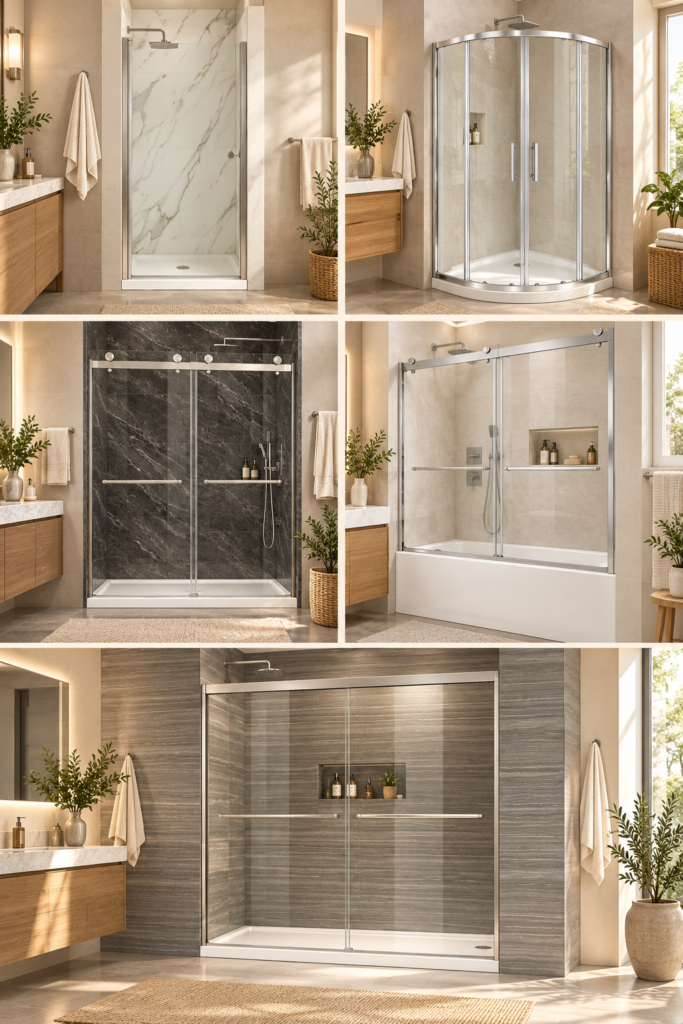
For a narrow alcove: Investigate Bathlink if the opening and pivot clearance work.
For a curved corner shower: Verify SHOLVEMIAR against the exact base and installation drawing.
For a wider shower: Compare Findepot and ELEGANT by fit range, height, entry width, hardware, and support requirements.
For an existing bathtub: Investigate the tub-specific HTLOTUS system.
The strongest choice is the door that fits your finished opening, operates comfortably, and suits the bathroom you intend to keep.
As an Amazon Associate, I earn from quallifying purchases.