A chandelier can bring a room together. Above a dining table, it creates a welcoming place to gather. In a living room,
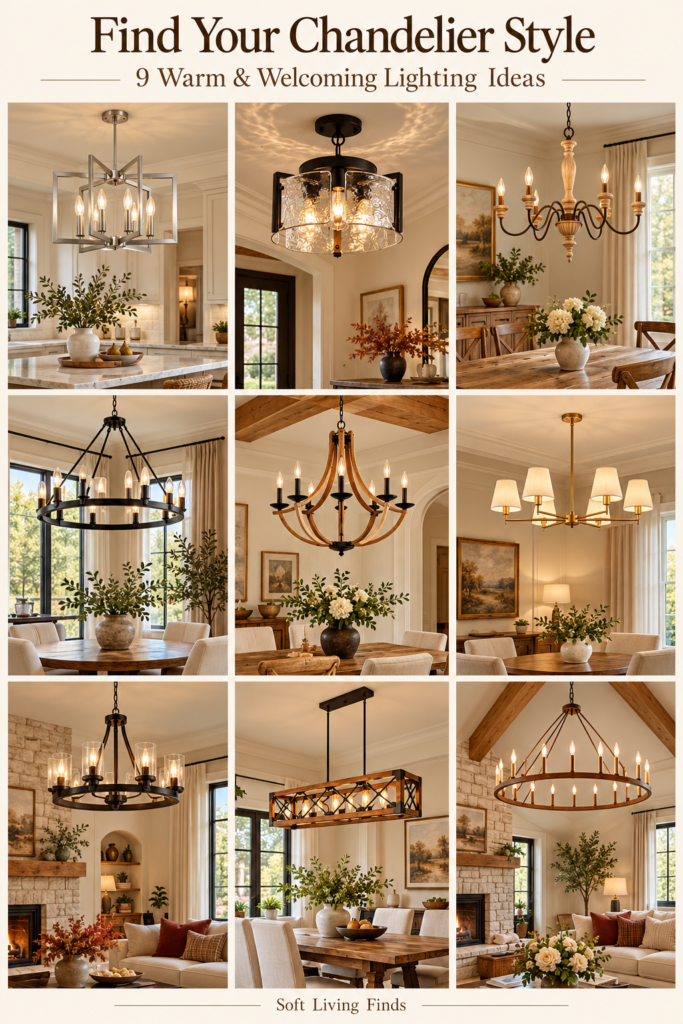
it draws attention to your seating area. In a bedroom, it adds a decorative finishing touch.
The right choice depends on your ceiling height, furniture, and the atmosphere you want to create. A sparkling crystal ring gives a different feeling from a woven pendant or a rustic wood chandelier—even when the room’s furniture stays the same.
As an Amazon Associate, I earn from qualifying purchases.
20 chandelier styles at a glance
These comparisons describe general design characteristics. Individual products vary in materials, dimensions, installation requirements, and lighting features.
| Chandelier style | Where to consider it | Decorative effect | What to check |
|---|---|---|---|
| 1. Single crystal ring | Living room or round dining table | Sparkling, modern focal point | Ring diameter and hanging height |
| 2. Multiple crystal rings | Tall living room or stairwell | Dramatic, layered statement | Ceiling clearance and installation |
| 3. Crystal drum | Dining room or bedroom | Structured sparkle | Shade size and cleaning access |
| 4. Traditional tiered crystal | Formal dining room or entryway | Ornate, classic elegance | Weight and ceiling support |
| 5. Crystal globe | Breakfast nook or entryway | Rounded decorative accent | Overall diameter |
| 6. Linear crystal | Rectangular dining table | Elongated, glamorous centerpiece | Fixture length relative to table |
| 7. Gold candle style | Dining room or living room | Warm, traditional character | Bulb visibility and output |
| 8. Black candle style | Farmhouse dining room | Strong contrast and simple lines | Visual scale against furniture |
| 9. Wood and metal | Casual dining room | Rustic texture | Actual materials and finish |
| 10. Wagon wheel | Large dining room or vaulted space | Broad, substantial silhouette | Diameter and ceiling height |
| 11. Sputnik | Modern dining room or office | Sculptural, energetic shape | Arm span and exposed bulbs |
| 12. Clear glass globe | Kitchen or dining nook | Light, open appearance | Glare and glass cleaning |
| 13. Opal glass globe | Bedroom or dining room | Soft-looking, rounded form | Light output and glass opacity |
| 14. Glass branch | Dining room or living room | Airy, organic statement | Fragile parts and assembly |
| 15. Woven rattan | Casual dining area | Natural texture | Shade openness and light pattern |
| 16. Beaded | Cottage bedroom or dining nook | Relaxed decorative detail | Material and dusting access |
| 17. Lantern | Entryway or dining room | Framed architectural shape | Fixture height |
| 18. Flush-mount crystal | Room with limited ceiling clearance | Compact sparkle | Projection below the ceiling |
| 19. Semi-flush | Bedroom or smaller living room | Decorative presence with a short drop | Clearance underneath |
| 20. Modern LED ring | Contemporary living or dining room | Clean, continuous shape | Dimming, color temperature, and LED serviceability |
Crystal ring vs. traditional crystal: which look suits your room?
A single crystal ring, like the gold design in your screenshot, creates a clear focal point without the layers of a traditional tiered chandelier. Its circular shape works visually with a round coffee table, curved seating, or a round dining table.
A traditional crystal chandelier has a more elaborate silhouette. Consider it when the room already includes classic details such as decorative molding, formal dining furniture, or an ornate mirror.
For the warm living room look we created, the single ring complements the cream sofa, round wood table, and stone fireplace. The crystals introduce shine while the wood and textiles keep the room inviting.
Gold vs. black finishes
Gold finishes pair beautifully with ivory upholstery, warm wood, burgundy cushions, and rust-colored accents. Repeat the finish in a few small details—a mirror frame, lamp, or tray—to connect the lighting with the rest of the room.
Black finishes create a stronger outline against pale walls. They work especially well when a room already includes black window frames, cabinet hardware, or metal furniture.
Finishes vary between products. Look closely at listing photos to distinguish bright polished gold from muted brushed brass.
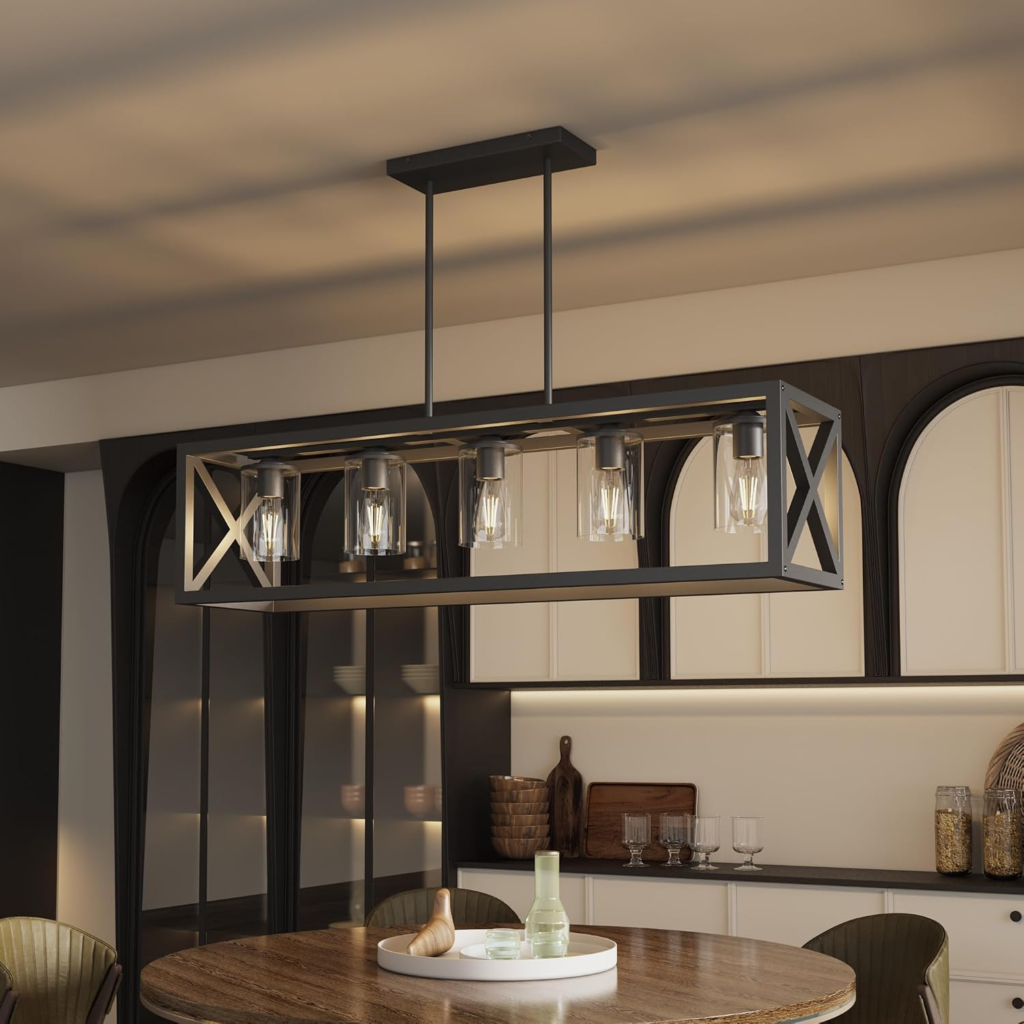
Start with the furniture beneath the light.
A round fixture can echo a round dining table or bring balance to a seating arrangement. A linear chandelier follows the length of a rectangular dining table or kitchen island.
Before ordering, mark the fixture’s approximate footprint with painter’s tape on the floor or tabletop. This helps you picture its width and length alongside your furniture. Also check the total hanging height, including the canopy and suspension.
Choosing lighting for a smaller room
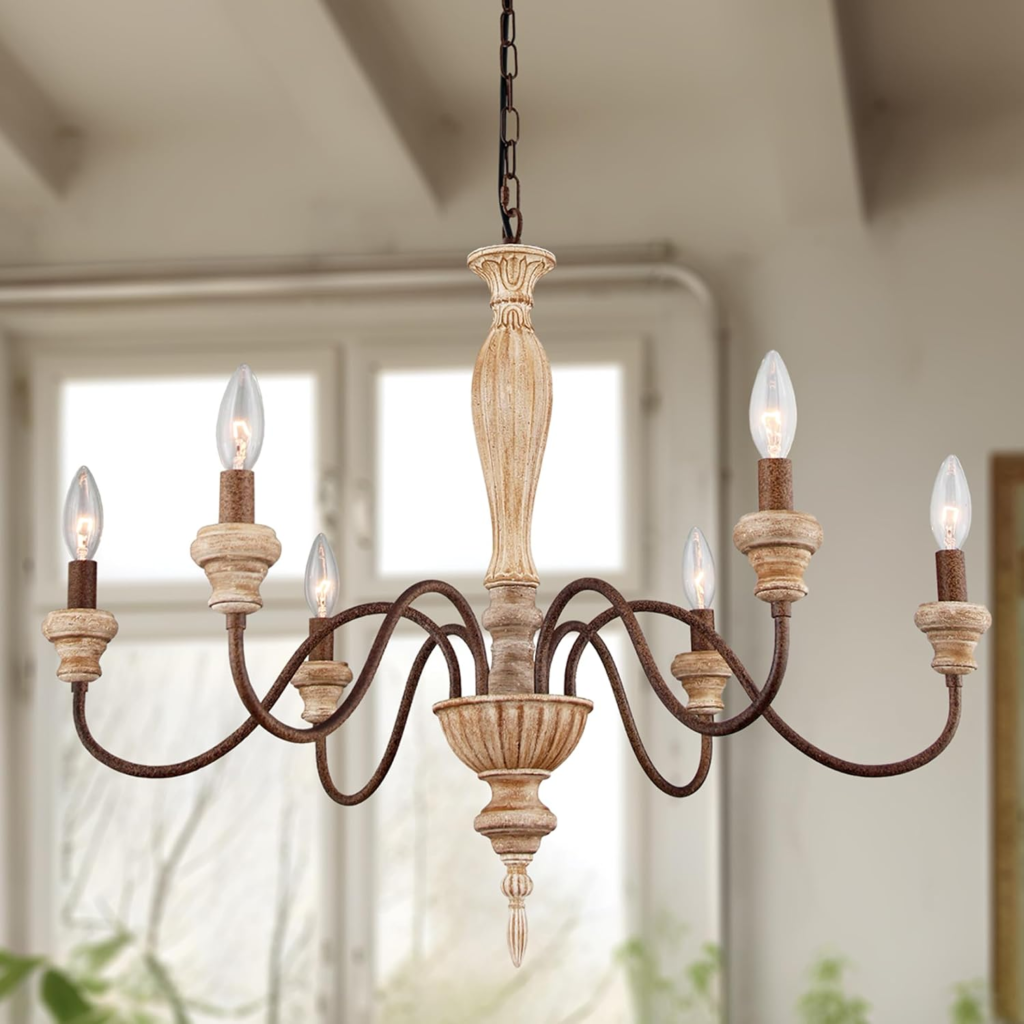
In a smaller room, consider how much visual space the fixture occupies. An open metal frame or clear glass design may feel less dense than a large shaded fixture.
Limited ceiling clearance may make a flush-mount or semi-flush design more practical. Measure the actual space beneath the light rather than choosing by appearance alone. Door swings, walking routes, and nearby furniture all matter.
A compact room can still have a striking chandelier. Keep surrounding decorations selective so the light has room to stand out.
How to decorate around a gold crystal chandelier
Begin with a calm foundation: cream, oatmeal, or warm beige walls and upholstery. Add a wood coffee table or dining table to introduce natural texture.
Next, choose one or two accent colors. Burgundy and rust create an autumn mood; blush and pale blue give the room a softer feeling. Repeat those colors through cushions, a throw, or flowers.
Finish with a vase of roses or lilies and a leafy plant near a suitable window. Use a few smaller light sources around the room so the chandelier becomes part of a comfortable lighting arrangement.
Keep tall branches and flower arrangements from blocking the fixture or views across a dining table.
What to compare before buying
Two chandeliers can look similar in photos and have very different specifications. Compare:
- Dimensions: Overall width, height, and adjustable hanging range.
- Materials: Crystal, glass, acrylic, wood, and metal should be identified clearly.
- Light source: Replaceable bulbs or integrated LEDs.
- Dimming: Whether the fixture supports dimming and what compatible equipment it requires.
- Light color: Whether the color temperature is fixed or adjustable.
- Installation: Fixture weight, ceiling compatibility, and mounting requirements.
- Maintenance: Access for cleaning, replacement bulbs, and replacement parts.
For integrated LED designs, check what the manufacturer says about servicing the light source or driver. For sloped ceilings, confirm compatibility in the product instructions.
Choose the atmosphere you want to come home to
Picture the room in the evening. Do you want sparkling light above a dinner table, a sculptural centerpiece in your living room, or a softer decorative fixture in your bedroom?
Choose the shape that suits your furniture, confirm the measurements, and build the room’s colors around it. A thoughtful combination of lighting, flowers, wood, and soft textiles can make the space feel personal and welcoming.
Explore my chandelier inspiration on Amazon for more decorating ideas.