A small home feels more welcoming when everyday storage becomes part of the decor.
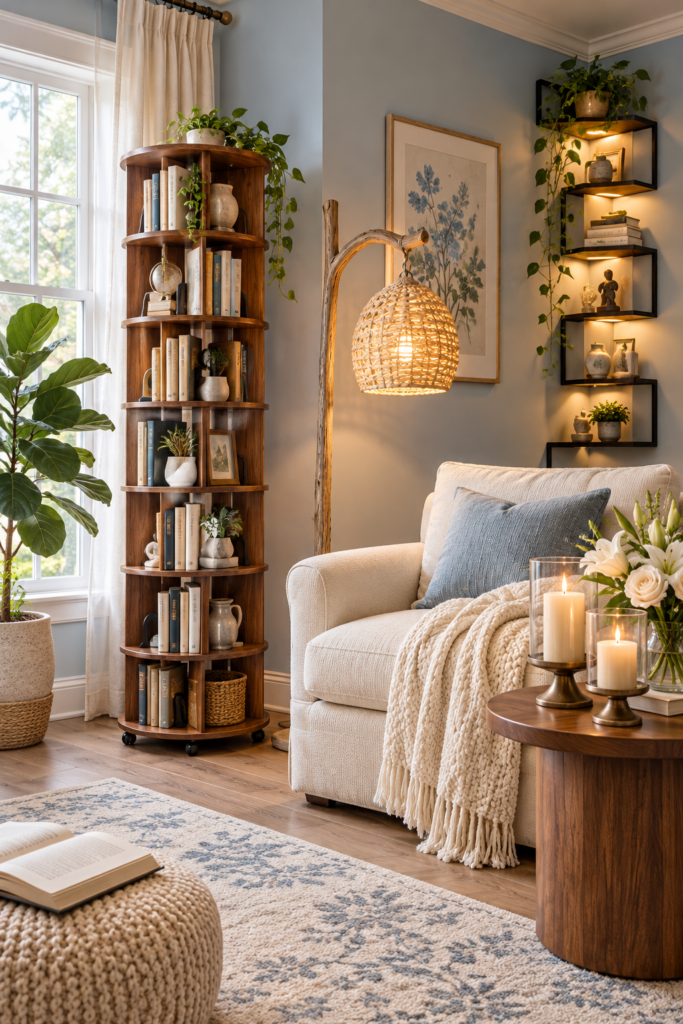
A narrow shoe cabinet can give your entrance a finished look. A tall bookshelf can turn an unused corner into a reading spot. Warm lighting and a few carefully chosen accessories help connect everything.
These five finds bring that idea together: a walnut rotating bookshelf, a woven-shade floor lamp, glass hurricane candle holders, lighted corner shelves, and a fluted shoe cabinet. Here’s how to arrange them so your home feels comfortable, organized, and easy to move through.
As an Amazon Associate, I earn from qualifying purchases.
Start with a simple color palette
For the look shown in these inspiration images, combine soft blue walls, cream upholstery, warm walnut furniture, and small touches of brass or black. Repeat those colors between the entryway and living area to make the spaces feel connected.
Before buying, measure the available floor space, door openings, and furniture footprints. Mark larger pieces on the floor with painter’s tape so you can see how they affect your walking paths.
The images are styling inspiration; check each listing for the actual dimensions, finish, shelf count, and installation requirements.
1. Use a walnut rotating bookshelf to create a reading corner
A rotating bookshelf brings books and decorative objects into one compact vertical arrangement. It works especially well beside a reading chair, where everything stays close without requiring a long bookcase.
Place the tower near a window or beside the chair, leaving enough room for it to rotate freely. Keep curtains and neighboring furniture clear of its moving edges.
Style most compartments with books, then leave a few openings for a small ceramic vase, framed photograph, or basket. Keeping some space empty helps the shelves look intentional instead of crowded. Put heavier items toward the bottom and follow the product’s stability instructions.
Pair it with one comfortable chair that suits your room. A cream chair and soft blue cushion will create the calm look in the image, while a small ottoman can provide a place to rest your feet.
2. Add a woven floor lamp for warm, useful lighting
The woven lamp introduces texture alongside the smooth walls and walnut furniture. Its warm glow also makes the reading corner feel inviting after daylight fades.
Position the base beside or slightly behind the chair, with the shade near the reading area. Check that the lamp’s full height and curved arm fit without extending into a walkway.
A woven shade may create decorative shadows, so choose a compatible bulb that provides enough light for your needs. If you read often, test whether the lamp lights the page comfortably.
Keep the nearby styling simple. One cushion and a folded throw give the chair a cozy finish without covering the seat.
3. Style glass hurricane candle holders as a small focal point
A pair of hurricane holders adds height and a gentle glow to an entryway cabinet or sturdy side table. Their different heights make a simple arrangement feel more considered.
Group them together at one end of the surface. Place a modest vase at the other end and leave the middle available for daily use.
In a compact reading nook, choose a side table large enough to hold a drink without squeezing it between decorations. If the surface is small, display the candle holders on the entryway cabinet instead.
Flameless pillar candles offer the candlelit look near curtains, plants, and blankets. With real flames, maintain the clearances specified by the candle and holder manufacturers.
4. Turn an unused wall corner into a display area
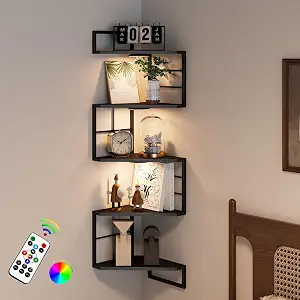
Lighted corner shelves draw attention upward and provide a place for small accessories without adding another piece of furniture to the floor.
Use them on a clear corner wall beside the entryway cabinet or reading area. Where possible, keep them away from the rotating bookshelf so each piece has its own space.
Arrange a small stack of books on one shelf, a ceramic object on another, and a small trailing plant near the top. Let some shelves remain lightly styled. Too many objects can make a narrow corner feel busy.
Mount the shelves according to the supplied instructions and wall type, and stay within their weight limits. Plan the power connection before installation so the lighting cord can run neatly.
5. Make the fluted shoe cabinet your entryway anchor
The walnut fluted cabinet gives shoes a designated home while creating a useful landing surface near the door.
Place it against a wall where the entrance door and flip drawers can open fully. Measure the cabinet with the drawers open, not just closed. Check shoe capacity and compatibility with your household’s shoe sizes before purchasing.
Above it, hang one botanical print or a mirror scaled to the cabinet. On top, use a shallow tray for keys, the candle-holder pair, and a small vase of white roses or lilies. Leave enough open surface to set down your phone or mail.
Anchor the cabinet as directed by the manufacturer. Add a flat runner that fits the entrance without interfering with doors.
Bring the two spaces together
Give each area one clear purpose: the entryway holds shoes and daily essentials; the reading nook holds books, lighting, and comfortable seating.
If both areas are visible from one another, repeat the walnut finish, cream textiles, blue accents, and greenery. You don’t need to repeat every accessory.
For a very small studio, begin with the piece that solves your biggest problem. Choose the shoe cabinet if footwear collects by the door, or the rotating bookshelf if books need a home. Add the lamp and decorative pieces gradually.
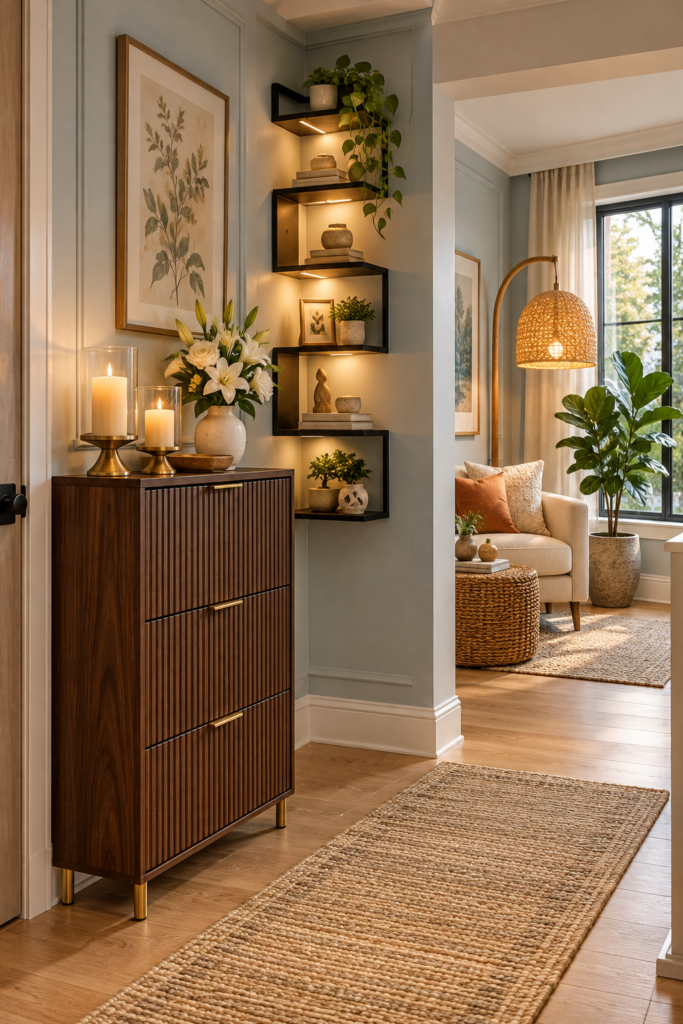
The strongest small-space design gives every piece a reason to be there. Clear surfaces, comfortable seating, accessible storage, and warm light will make these five finds feel like part of a thoughtfully arranged home.