The Heart of Soft Living Design: A Cozy Sanctuary
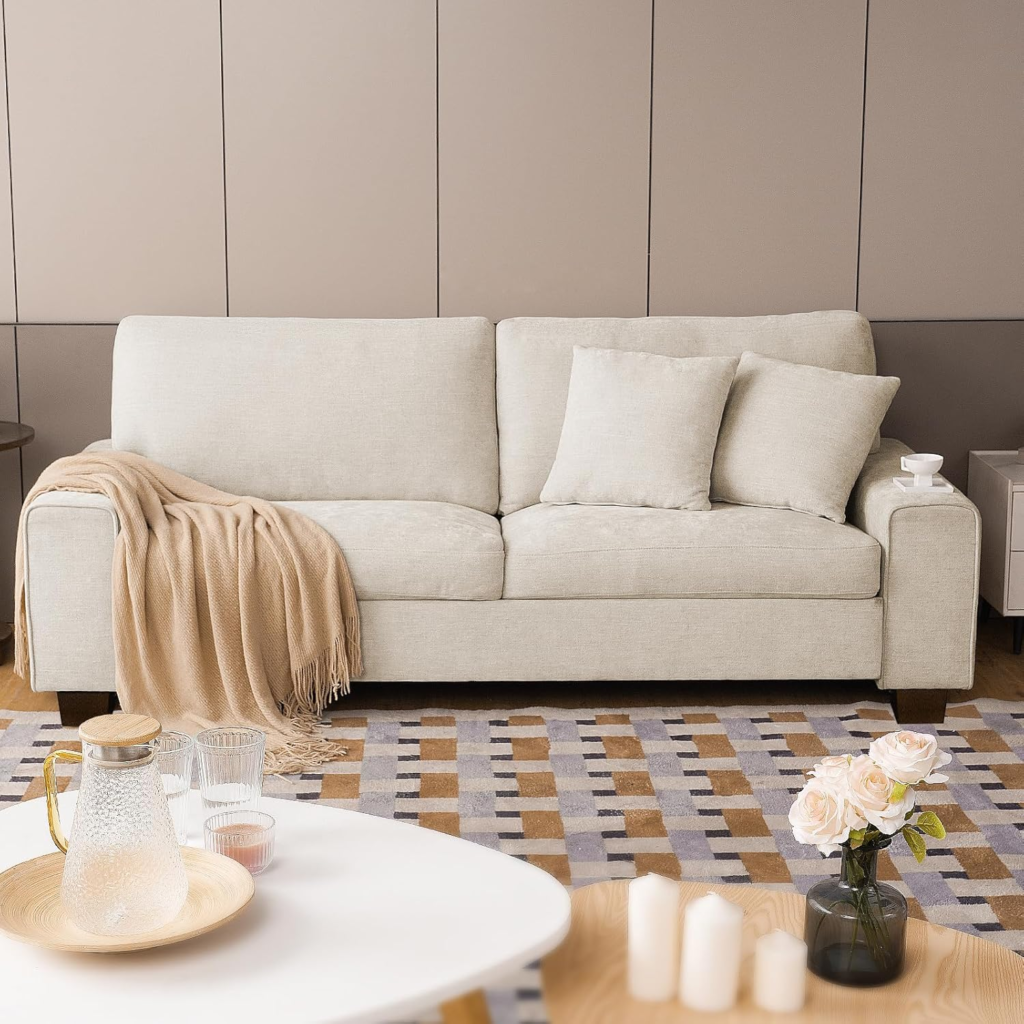
Soft living design is fundamentally about creating spaces that provide both comfort and tranquility, nurturing a sense of coziness in various living environments. At the heart of this design philosophy lies the quintessential element: the placement of a warm caramel-tone sofa against a creamy wall. This harmonious juxtaposition not only establishes a primary focal point but also sets a soothing ambiance that promotes relaxation. See Current Price Here. As an Amazon Associate, I earn from qualifying purchases.
When designing a soft living area, the idea of ‘small space, big comfort’ becomes paramount. A modestly-sized room can, through thoughtful arrangement and design choices, exude a richness and warmth that transforms it into a cozy sanctuary. The warm tones of the sofa create an inviting atmosphere, while the creamy wall acts as a serene backdrop, allowing the sofa to truly shine. This synergy between the two elements fosters a peaceful environment that can be enjoyed for both daily living and entertaining guests.
Integrating soft textiles and plush cushions further enhances the comfort level. A range of textures can be introduced, from knitted throws to soft rugs, providing inviting layers to the space. Furniture pieces that prioritize comfort without compromising on aesthetics are ideal for achieving a balanced design. Each chosen element contributes to the overall theme of softness, promoting a tranquil and inviting atmosphere.
Moreover, the strategic placement of lighting plays a crucial role in emphasizing the soft living environment. Warm, ambient light can enhance the caramel tones of the sofa and create a calming effect that makes the space feel even more inviting. This thoughtful orchestration of color, texture, and light ultimately creates a sanctuary within the home, exemplifying how soft living design can transform any small area into a comforting retreat.
Beauty in the Details: Floral Elements and Texture
In the quest for a soft living space, the inclusion of floral elements plays a pivotal role, transcending mere decoration to evoke emotional connections and enhance overall serenity. The soft white rose stands out as a particularly significant floral motif; it symbolizes romance and peace, serving as a reminder of the intimate relationship we nurture with our surroundings. This connection is not limited to romantic love but extends to a deeper appreciation for life itself, fostering a tranquil environment that invites reflection and calm.
Integrating such floral elements into the design of a living space can greatly influence its ambience. From fresh flowers in a vase to floral-patterned upholstery, these elements not only beautify the space but also contribute to an overall sense of comfort and solace. Take, for instance, a flower-printed pillow positioned on a plush sofa. This simple addition remarkably enhances the texture of the seating area while simultaneously offering visual delight. The interplay of textures—like soft fabrics and delicate floral designs—creates a layered environment that invites relaxation. Such thoughtfully curated details breathe life into an area, transforming it from a mere functional space into a comforting retreat.
Delving into the concept of layering, it is essential to consider how various textures interact harmoniously. A balance between smooth cushions, tactile throws, and floral embellishments can lead to a multifaceted experience. Each texture contributes distinctively, engaging not just the visual senses but also the tactile, establishing an inviting atmosphere conducive to unwinding. Ultimately, the incorporation of floral elements and the thoughtful layering of textures are fundamental in crafting a soft living space that resonates with beauty and emotional comfort.
The Power of Color: Crafting Peaceful Ambiance
When it comes to designing a soft living space, the choice of color plays a pivotal role in creating a peaceful ambiance. The harmonious blend of colors, particularly cream, beige, and warm brown, can transform any space into a sanctuary of comfort and tranquility. These colors are not only aesthetically pleasing but also invoke a sense of safety and openness, contributing to an inviting environment.
The subtlety of cream and beige colors enhances natural light, promoting a feeling of spaciousness. In a well-lit room, these light tones reflect sunlight effectively, making the space feel airier and broader. This capacity to reflect light significantly influences the vibe of the room, as it can eliminate feelings of claustrophobia often associated with darker shades. Likewise, warm brown accents add depth to the palette while maintaining a cozy atmosphere, striking a balance that promotes relaxation.
Moreover, the avoidance of harsh color contrasts is essential in crafting a soft living space. High-contrast colors can create visual discord, which might lead to unease in the environment. Instead, a palette that utilizes subtle gradients of color fosters a sense of cohesion, preventing the eye from being jarred by sudden deviations in color saturation. By embracing softer hues and avoiding stark contrasts, even smaller spaces can achieve a serene retreat feel.
Ultimately, the strategic use of color lays the foundation for a space that invites comfort and relaxation. In a world that can often feel overwhelming, such a color palette stands as a refuge, encouraging individuals to unwind and recharge in their homes. The effects of thoughtful color integration in design are profound, allowing spaces not only to look inviting but also to feel inherently peaceful.
Creating Emotional Spaces: Home as a Safe Haven
In the realm of interior design, the philosophy of creating emotional spaces emphasizes the importance of crafting environments that foster a sense of safety, tranquility, and emotional wellbeing. A home should serve not just as a physical shelter but also as a sanctuary that nurtures the mind and soul. This notion elevates the design process from mere aesthetics to intentional selections that resonate with the inhabitants on a deeper emotional level.
The key to developing such spaces lies in choosing thoughtful, heart-calming pieces instead of overwhelming a room with excessive decor. Each item within the home should evoke feelings of comfort and restfulness. For instance, incorporating soft textures through plush throws, cozy cushions, and warm lighting can instantly transform an area into a relaxed retreat. The inviting nature of these materials can create a gentle embrace, signaling to all who enter that they are indeed at home.
Additionally, the use of nature-inspired elements, such as botanical accents or natural wood finishes, can invoke a sense of peace and grounding. Plants not only purify the air but also contribute life and vibrancy while encouraging mindfulness in daily routines. Complementing these organic accents with calming color palettes, such as soft pastels or earthy tones, further enhances an atmosphere that is soothing and harmonious.
Ultimately, the goal is to curate spaces that feel soft, romantic, and restorative. A well-designed home can significantly impact one’s emotional state, providing a backdrop for rest and reflection. By prioritizing heartfelt design choices over superficial embellishments, we create environments that offer comfort and support, embodying the essence of a true home. Emphasizing emotional wellness in design allows us to cultivate havens that promote serenity and joy in our everyday lives.As an Amazon Associate , I earn from qualifying purchases.