Shoes beside the front door are easy to overlook—until you have to step around them with groceries in your hands. One pair becomes several, slippers collect under a table, and the entrance begins to feel crowded.
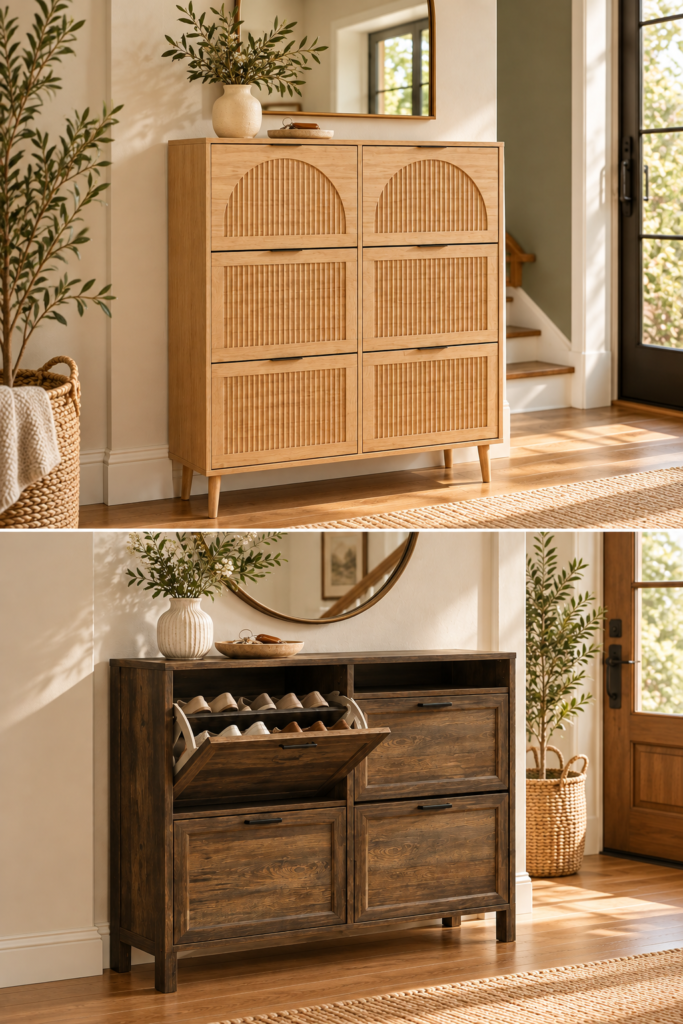
A hidden shoe cabinet gives everyday footwear a home while keeping your entrance visually tidy. Styled thoughtfully, it can also become an attractive focal point: a place for keys, a backdrop for a mirror, and a welcoming introduction to your home.
Two options to consider are the BORNOON Shoe Cabinet with 6 Flip Drawers and modern fluted panels and the brown Shoe Cabinet with 4 Flip Drawers in your selection.
The best choice depends on your hallway, your footwear, and how you want to organize—not drawer count alone.
As an Amazon Associate, I earn from qualifying purchases.
This guide is based on product descriptions, rather than personal testing. Confirm specifications on the exact listing before ordering.
Six Flip Drawers vs. Four: What Matters Most?
| Feature | BORNOON Six-Drawer Cabinet | Brown Four-Drawer Cabinet |
|---|---|---|
| Supplied drawer count | Six flip drawers | Four flip drawers |
| Main style feature | Modern fluted panels | Warm brown finish |
| Organization approach | More separate drawer zones | A simple four-zone system |
| Decorating direction | Modern, transitional, or neutral | Farmhouse, rustic, or warm neutral |
| Key buying check | Dimensions and usable interior space | Dimensions and usable interior space |
Six drawers do not automatically hold more shoes than four. Compartment dimensions, divider arrangements, and shoe sizes determine how much usable storage you get.
1. BORNOON Six-Drawer Shoe Cabinet: Add Texture While Hiding Clutter
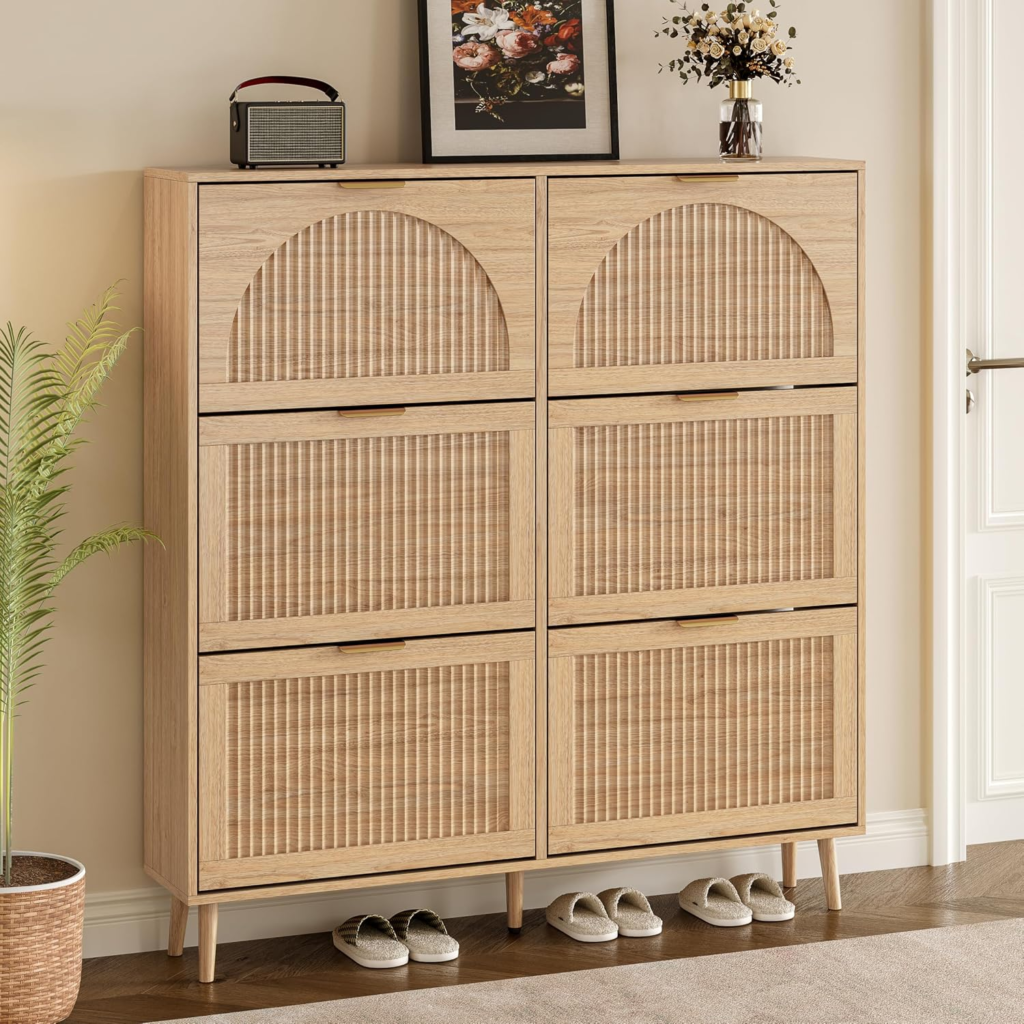
The BORNOON title describes a slim cabinet with six flip drawers and fluted panel fronts. The textured design gives it a decorative role beyond shoe storage.
Those vertical grooves can bring interest to a plain hallway without adding busy patterns or extra accessories. If you like furniture that combines organization with a modern appearance, this is a design worth exploring.
Organize the Drawers Around Your Household
Six drawers give you several ways to separate footwear. Assign compartments by person, shoe type, or frequency of use.
For example:
- Keep everyday sneakers in the most convenient compartment.
- Group sandals and flats together.
- Give occasional footwear its own section.
- Reserve a drawer for another household member’s daily pairs.
Choose the arrangement that makes putting shoes away easiest. An elaborate system is less useful if no one follows it.
How to Decorate a Fluted Shoe Cabinet
Let the textured fronts remain the main feature. Start with a small tray for keys, a ceramic vase, and a mirror above the cabinet.
A round mirror can soften the straight lines of the furniture. An arched mirror can introduce a gentle architectural detail. Measure both the cabinet and available wall space before choosing a size.
For a neutral palette, combine cream accessories, warm wood, and a little greenery. Keep the top spacious enough to remain useful.
What to Check Before Buying
“Slim” usually describes depth; it does not guarantee that the cabinet is narrow in width or short in height.
Check the full assembled dimensions, the clearance needed to open each drawer, and the interior space for your largest everyday shoes.
Also read the material specification. A product described as “wooden” is not necessarily made from solid wood.
2. Brown Four-Drawer Shoe Cabinet: Create a Warm Entryway Foundation
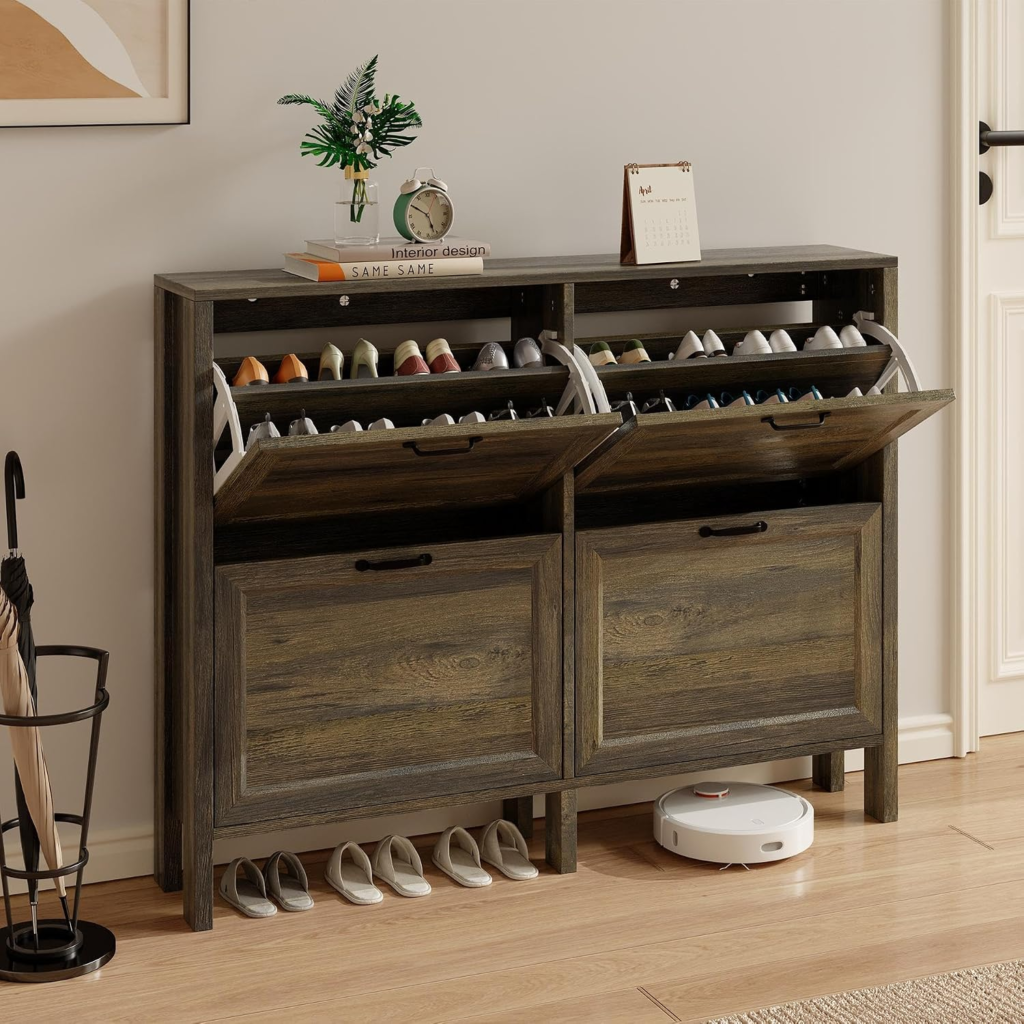
The brown cabinet offers a starting point for a warmer decorating scheme. Its finish can connect with wood floors, woven textures, cream walls, and earthy accents.
An exact-title retailer match identifies the four-drawer brown option as LOUVIXA. Confirm the brand on your selected listing before ordering or publishing brand-specific details. WoodArtSupply
A four-drawer system can be straightforward to maintain. Divide footwear by household member or create sections for sneakers, flats, sandals, and occasional shoes.
How to Style the Brown Cabinet
Pair the cabinet with an ivory vase, a simple mirror, and a small catchall dish.
Repeat its brown tone lightly elsewhere—in a picture frame, wall hook, or nearby basket—to make the arrangement feel connected.
For a farmhouse look, add greenery and a neutral runner. For a more modern look, keep accessories minimal and introduce a little black metal through the mirror frame.
Leave open space on top. A useful surface for keys and a wallet will serve your household better than one filled edge to edge with decorations.
What to Check Before Buying
A four-drawer cabinet is not automatically smaller than a six-drawer model. Compare the actual width, height, and depth.
Check the compartment layout and usable shoe height too. Bulky sneakers and tall boots may need more room than slim flip drawers provide.
3. Measure the Hallway With the Cabinet Open
A cabinet must fit your entrance while you are using it.
Measure the wall between doors, trim, outlets, and nearby furniture. Then consider how far the drawers extend when tilted open.
Leave enough space to stand in front of the cabinet without blocking the main walking route. Check that the front door and nearby closet doors can still open comfortably.
Baseboards matter as well. They can prevent a cabinet from sitting as close to the wall as its product photo suggests.
Try this before ordering: Mark the cabinet’s footprint on the floor with removable tape. Walk past it carrying a bag and open nearby doors. This simple exercise can reveal an awkward fit.
Follow the manufacturer’s assembly and wall-anchoring instructions. Freestanding furniture can still require an anti-tip attachment.
4. Check Your Shoes Before Counting Storage Capacity
Start with the footwear you want to keep near the entrance. Separate everyday pairs from seasonal or rarely worn shoes.
Then measure your largest regular pair and compare it with the cabinet’s usable interior dimensions.
Pay attention to:
- Length: Will the shoe fit without being forced?
- Width: Can the intended pairs sit together?
- Height: Is there room for heels or bulky uppers?
- Divider placement: Does the layout suit your footwear?
Advertised pair counts can vary considerably with shoe size and style. Sandals take up different space from bulky sneakers.
If removable dividers are listed, check how changing them affects capacity. Making room for taller footwear may reduce the number of pairs stored.
5. Build a Simple Entryway Routine
The cabinet works best when its organization supports daily habits.
Keep frequently worn shoes accessible. Store matching pairs together, avoid overfilling compartments, and let wet footwear dry before putting it away.
Use one small tray for keys and essentials. Move mail, shopping bags, and unrelated items elsewhere before they turn the cabinet top into another cluttered surface.
The routine should feel easy: arrive home, put shoes away, and place keys in the tray.
Which Shoe Cabinet Should You Choose?
Consider the BORNOON six-drawer cabinet if you like fluted texture and want more separate organization zones—provided its dimensions and interior layout fit your home.
Consider the brown four-drawer cabinet if you prefer a warm finish and a simpler storage system—provided it accommodates the shoes you use most.
If neither fits your footwear or leaves enough walking space, keep looking. The right cabinet should work comfortably in your home.
A welcoming entryway begins with room to move and a clear place for everyday belongings. Add practical shoe storage, a mirror, and a few useful accessories, and your entrance can feel organized while keeping its warmth.
Compare a BORNOON six-drawer fluted shoe cabinet with a brown four-drawer cabinet. Explore shoe fit, hallway measurements, and entryway styling.